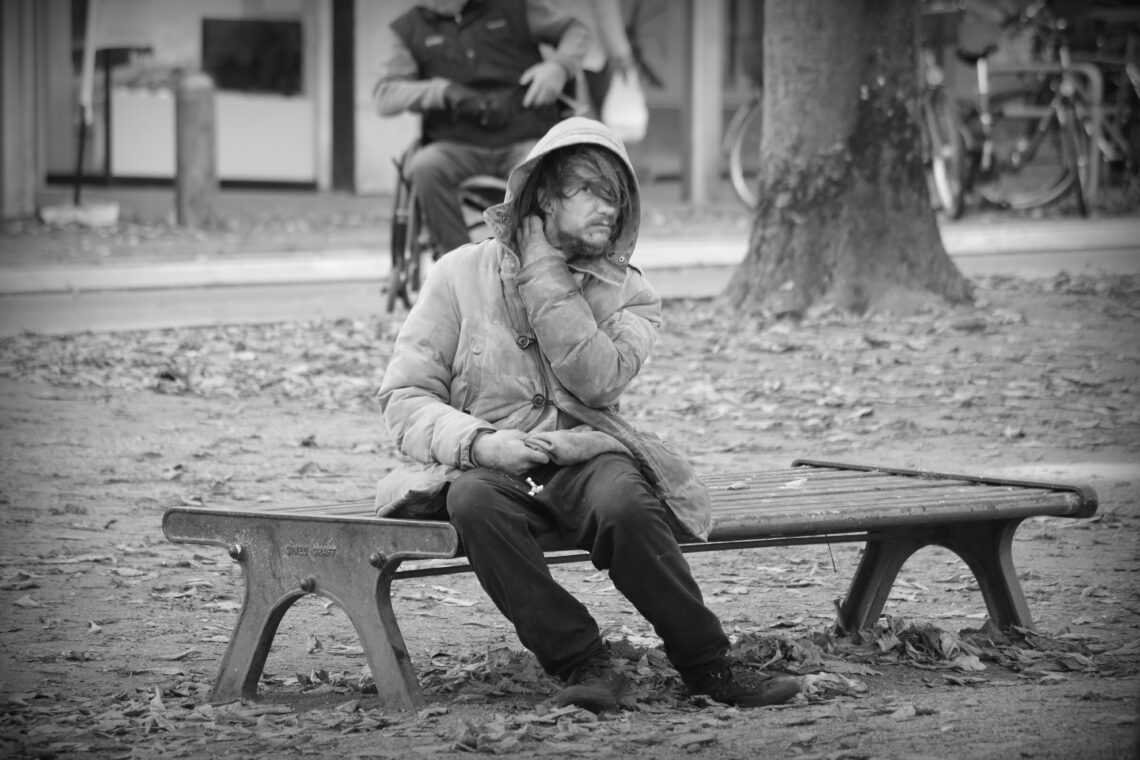
A Most Respectable Lifestyle
I suspect it depends a great deal on a person’s interpretation of Respectable, and whether it can be accepted for many different ways of life, or just from those in certain professions, and the former landed gentry but, as a child, it was a lifestyle which appealed to me. The fault is undoubtedly that of my grandmother – mother’s side – who talked of the old ways of the professional tramp, and the morals and standards some of them lived up to. How they traversed the country, seeking odd jobs and short-term employment in return for sustenance and a quarter to rest in, before moving on to new areas; unbound, unrestricted, free. A fallacy, of course, as no one is free, no matter what they may claim or believe: we all suffer under the yoke of something or other, whether it be the need to work, to live, or to be successful. Some, of course, far more than others.
Why, though, should my grandmother, a very British racist of her times, suggest that the life of a tramp is something respectable, something worthwhile? I did not ask; I did not know to ask. The word, as well as the lifestyle, has a long history, and is recorded as something normal in society of the 1760s and later, where people moved from one fiefdom or bishopric to another, seemingly without master or mistress, and lived as the land allowed them. By the time I came to learn of the life as a tramp, of the possibilities and the seeming respectability – including several books written by an ancient master of the art of tramping under the auspices of George Bernard Shaw, and published in 1908 – it had long since lost its glamour. The meaning began to change, along with society, in the 1920s, and this word came to refer to women of loose morals, tramping from one relationship, one bed, to another. I was not introduced to this change, this removal of grandeur and purpose, despite the use of the word in songs of my time, and those from earlier still played on the airwaves, in record shops and bars. The Lady is a Tramp was coined, by Rodgers and Hart, in the show Babes in Arms long before my father was a twinkle in his father’s eye.
As I youth I was introduced to their signs and markings, without really understanding the meanings. Where a family was friendly and prepared to help with food or short term employment, markings would be made on the gatepost to help others walking the same path. Likewise, unhelpful, unfriendly, even dangerous areas would be shown with separate markings. The open road was a series of signposts and helpful notes on gateposts, a dream for anyone wishing to break the bonds of closed society and escape the rat race. Ironic, then, that one of the Rat Pack, Frank Sinatra, recorded The Lady is a Tramp, although it can never be said that the Rat Pack was anything other than an embodiment of closed society and privilege.
The word tramp today is nothing other than derogatory. There are few who appreciate that it harked back to other times, that it had a certain respectability, that thousands lived the tramping life – in England and across Europe – and moved from one means of employment to another. The seeking of work remains, the willing standing in small groups of like-minded men waiting for a pick-up truck to pull over and offer badly paid but necessary farm and construction work, off the books is a sight still seen in some States in the USA, although bound now with many dangers and pitfalls. The Great Depression, especially in the United States, would have effectively killed off the professional tramp there, as tens of thousands moved, by any means possible, across the land in search of work. And the necessity of documentation, of work permits, of being registered somewhere as having a home and being stable, reliable, has killed the rest, but for those willing to work cash in hand, and avoid the dangers of authority, and random police checks.
But for a youth full of ideals, as I was then, listening to the tales of a grandmother who had seen, I thought, something of the world, it sounded perfect. A lifestyle to be emulated, a freedom waiting to be found and taken advantage of. The closest I ever came, within the bounds of my restrictive financial means, was to tramp from one youth hostel to another, properly attired, and with almost all I needed either on my back, or available at my destination. Now and then a tent set up under trees, away from the main roads, or under a damp bridge in the capital city, when the cost of roaming cut into the cost of eating, but nothing worthy of record. But then, I am not a celebrity caught up in a publicity stunt of living as a homeless person just to see what it is like, to gain kudos, or clicks, or sales. Nor am I forced into the position of the homeless, the unemployed, the outcast. That is where the respectability finds its end.

